WellbeloveGarden Design

Projects

Six gardens, six very different briefs.

Every garden arrives with a constraint attached — the wind off the coast, a dog, four brick walls, or an idea the owners have been carrying around for years. These are the ones that shaped the way I work.

Coastal planting · exposure

Seaside Garden

A coastal brief is really a planting brief. Wind, salt and thin, fast-draining ground rule out a long list of the obvious choices, so the scheme is built from things that genuinely want to live there — tough evergreen structure, silvers and greys, grasses that move rather than break. Get that right and the garden looks deliberate in January, not just in July.
Planting scheme · town garden

London Planting Scheme

A planting-only commission for a London garden: the layout stays as it is, and the work goes into what grows in it. Town gardens are shade, reflected heat, dry soil at the base of walls and neighbours on three sides, so the plan leans on structure, layered height for privacy and a restricted palette — a small space reads as calm when it isn't asked to do six things at once.

Enclosure · small space

Courtyard Garden

Small gardens reward being designed hardest. Every surface is on show, every boundary is close, and there is nowhere to hide a bad decision. The approach is to treat the courtyard as a room: one good material underfoot, boundaries planted out of sight, generous pots rather than a scatter of small ones, and a single thing worth looking at from indoors.

Dogs · practical design

Dog-Friendly Garden

Designing around a dog is a proper design constraint, not an afterthought. It means routes the dog will take anyway being given a surface rather than a worn stripe of mud, planting robust enough to be brushed past, no borders that reward a dig, and a lawn specified so it survives being used. Do it deliberately and the garden looks better, not worse.

Kitchen garden · borders

Cottage Garden Vegetable Patch

Vegetable and herb beds with flowering planting woven through them — productive, but designed to be looked at rather than hidden behind a screen at the bottom of the garden. Bed widths are set by arm's reach, paths by a wheelbarrow, and the ornamental planting does the work of making it feel like a garden rather than an allotment.

Narrative · materials

Footprints in the Sand

Some gardens start from an idea rather than a plan. This one takes its name and its thread from a piece of imagery the clients cared about, and the design carries it through in materials and planting instead of announcing it with an ornament. A garden built on something personal tends to be the one that gets used every day.

Project names are Dawn's own, taken from her portfolio. The notes above describe the design thinking behind each brief — full case studies and photographs of the finished gardens are being added.

Dawn's own photograph

A finished garden, close up.

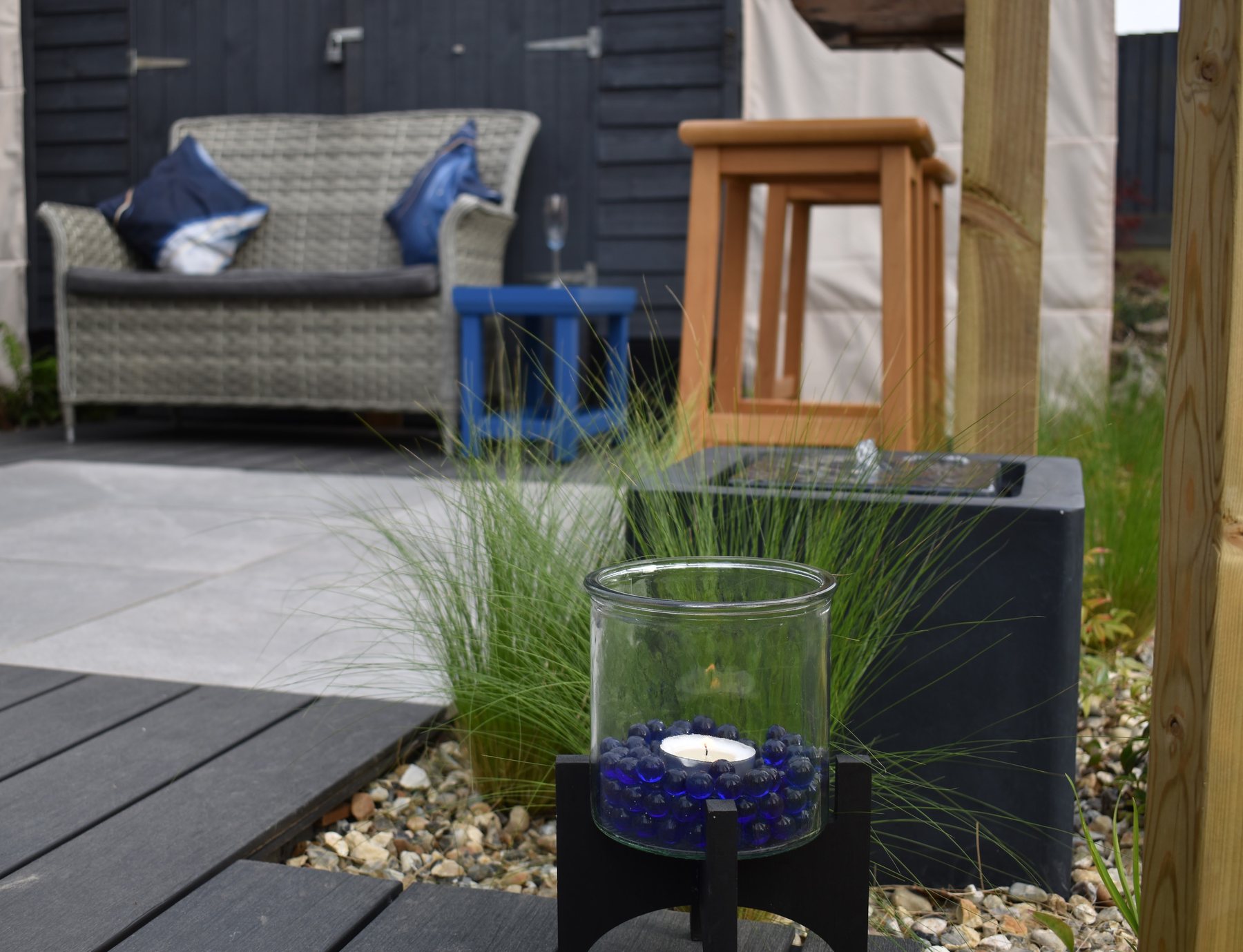
A finished contemporary garden from Dawn's own photographs: large-format porcelain paving meeting composite decking and a gravel margin, Stipa tenuissima softening the edges, and a dark water-feature cube against a black-stained boundary.

It is a good illustration of the low-maintenance, year-round approach I tend to favour: a restrained palette of hard materials, grasses doing the softening, a dark boundary so the planting reads against it rather than competing with an orange fence, and one thing worth looking at from the house.

The language, not the gardens.

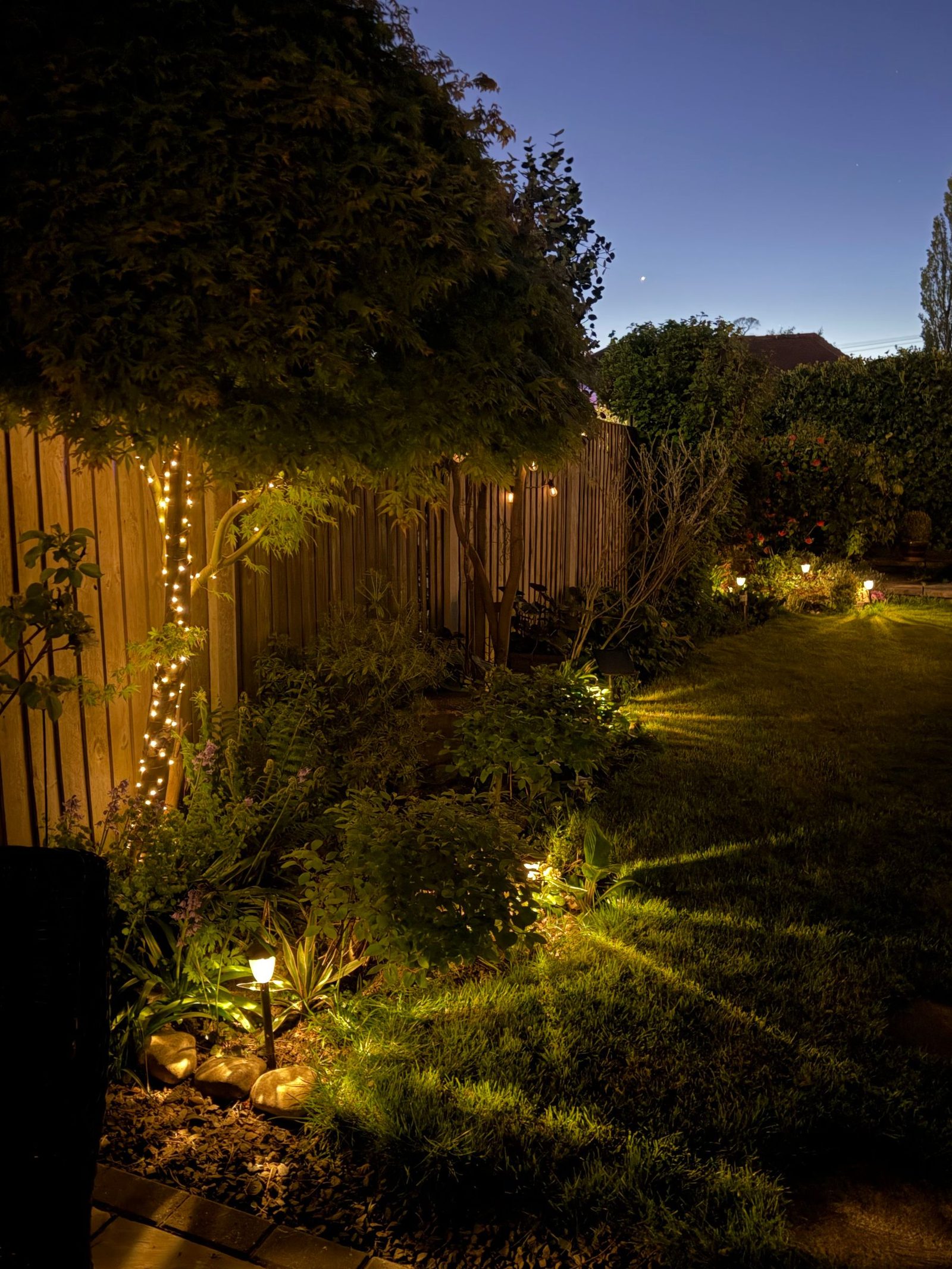
The images below are reference photographs, chosen to show the materials and planting ideas behind the work. They are not photographs of Wellbelove Garden Design projects — those are being photographed properly and will replace these.

What's your garden's catch?

Slope, shade, salt wind, a dog, a boundary you can't change — the constraint is usually where the design starts. Rated 5.0 on Google.